Listening to the Forest: How Chickadees, Sound, and Social Life Reveal the Hidden Costs of Habitat Disturbance

To most people, a chickadee is a cheerful flash of black, white, and gray flitting through winter branches, punctuating the cold with its familiar “chick-a-dee-dee-dee.” But to Dr. Jeff Lucas, professor at Purdue University, that tiny 10-gram bird carries one of the most sophisticated communication systems known in the animal world, and a powerful story about how habitat disruption reshapes life in ways we rarely notice.

Dr. Lucas, who studies animal communication and auditory processing, has spent decades elucidating how chickadees communicate, how they hear, and how changes in the landscape alter not only where they live but also how they behave, socialize, and survive.

A Bird With a Surprisingly Complex Voice

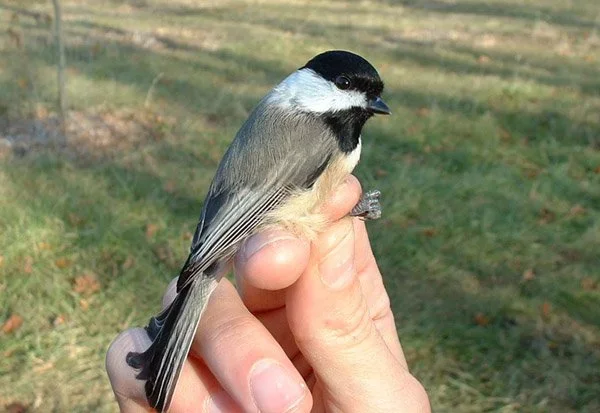
Carolina chickadee

Chickadees belong to a family of birds that includes titmice and tits, all of which produce versions of the well-known chickadee call. But the Carolina chickadee, in particular, stands out. “They have one of the most complicated vocal repertoires of anything we know, which is astonishing for a bird that small.”

Unlike many birds with relatively fixed calls, chickadees use a rich combination of tones, frequency changes, and timing to communicate detailed information. Their vocal system enables them to signal a range of signals, from predator threats to foraging opportunities and social status.

This complexity, Lucas explained, is not accidental. It is deeply tied to their unusual social system.

Summer Families, Winter Coalitions

In spring and summer, chickadees behave much like other songbirds. Pairs raise young within well-defined territories, feeding their chicks and defending their space. Then fall arrives, and everything changes. “At the end of summer, parents essentially kick their kids out.”

What happens next is remarkable. Adult chickadees from several neighboring territories merge into a single winter flock. Overnight, birds that once only needed to communicate with a mate and offspring must now navigate defense, foraging, cooperation, and dominance within a much larger social group.

“That sudden social complexity creates the need to talk about a lot of things. And we think that’s why their vocal repertoire is so diverse.” Young birds may either drift together in loose groups or wait for openings in established dominance hierarchies when older birds disappear, a dynamic rarely seen in other species.

When the Forest Changes, So Do the Birds

The only albino chickadee Dr. Lucas has seen in 38 years

Lucas and his colleagues have studied chickadee populations across a gradient of forest disturbance, from high-quality, intact woodlands to heavily altered landscapes. In undisturbed forests, chickadees maintain tight territories and stable social structures. But in areas where forests have been logged or converted, such as sites replanted with walnut trees, everything shifts.

“To a chickadee, a walnut tree is basically a boulder. It doesn’t provide food.” In these degraded habitats, territoriality disappears. Birds range over much larger areas, forming what scientists call fission-fusion flocks, where individuals associate with different birds from day to day. This flexibility may help birds find food, but it comes at a cost. “If there’s nothing worth defending, territoriality isn’t useful. So they spend more time foraging and less time defending space.”

Trust, Caching, and Winter Survival

One of the hidden consequences of habitat disruption involves food caching, an essential survival strategy for chickadees. Chickadees regularly store seeds in thousands of hidden locations, retrieving them later when food is scarce. But caching only works if a bird can trust its territory. “If you don’t have a territory, you can’t trust space, and if you can’t trust space, caching stops being useful.”

Without reliable caches, winter survival becomes more difficult, especially during snow or prolonged cold. Even common species such as chickadees, Lucas noted, are subtly affected when their social systems unravel.

Hearing the Seasons: A Shape-Shifting Auditory System

Beyond behavior, Dr. Lucas’s research revealed something even more surprising: chickadees’ auditory systems change with the seasons. His lab was the first in the world to demonstrate that birds reconfigure how they hear depending on the time of year. In spring and summer, their auditory system is tuned to process tonal songs used in mating. In fall and winter, it shifts to better detect the rapid, complex chickadee calls essential for flock coordination.

This discovery was accidental. “We thought our data were wrong. The results disappeared when we added more birds, until I realized half were collected in spring and half in fall.” What began as confusion turned into a breakthrough now recognized across vertebrates, including fish, birds, mammals, and humans. “When estrogen levels are high, the auditory system is better at detecting fine details. That’s true across species.”

Song, Culture, and Indiana’s Fragmented Forests

Chickadee songs are not hardwired. Like human language, they are learned, making them a form of culture. In central and southwestern Indiana, Lucas has documented substantial variation in chickadee songs, attributable to habitat fragmentation. “Indiana used to be a closed-canopy forest. Now, high-quality habitat often exists as ribbons along rivers.” These ribbons allow song variants to persist and evolve, even if they arise from mistakes or experimentation. Some populations transpose songs across pitch levels with precision; others do not. “We don’t yet know what all that variation means. But it’s mind-numbingly complex.”

Atherton Island and a Living Laboratory

Lucas’s work has brought him to Atherton Island Natural Area, now protected by Ouabache Land Conservancy. He was introduced to the property through Jim Nardi. Lucas collected chickadee calls there and found that birds on the island behave differently from those in other parts of the region, yet another reminder that place matters. “These populations are shaped by their landscape, and Atherton Island is a beautiful, important piece of that puzzle.”

Why This Matters to Everyone

For those who wonder why any of this matters to daily life, Lucas offered a simple answer. “Being outside in green space improves quality of life. And the more complex the ecosystem, the more valuable it is.”Birds move seeds, shape forests, and maintain ecological relationships that humans depend on, often invisibly. Disrupting those systems doesn’t just remove species it erodes the integrity of the entire landscape. “If all the chickadees disappeared tomorrow, the government would still exist. But the quality of the world around us would decline in subtle but profound ways.”

Understanding the Pieces to Protect the Whole

Lucas sees his role not as an advocate telling people how to live, but as a scientist helping others understand how the world works. “The integrity of a habitat depends on the associations among all its parts. From fungi to trees to birds to mammals.” Protecting land through organizations such as the Ouabache Land Conservancy, he believes, safeguards not only scenery but also the delicate social and sensory systems that enable ecosystems and people to thrive. “The more we understand what we’re seeing when we step outside, the richer our lives become. And that matters not just for us, but for the generations that follow.”

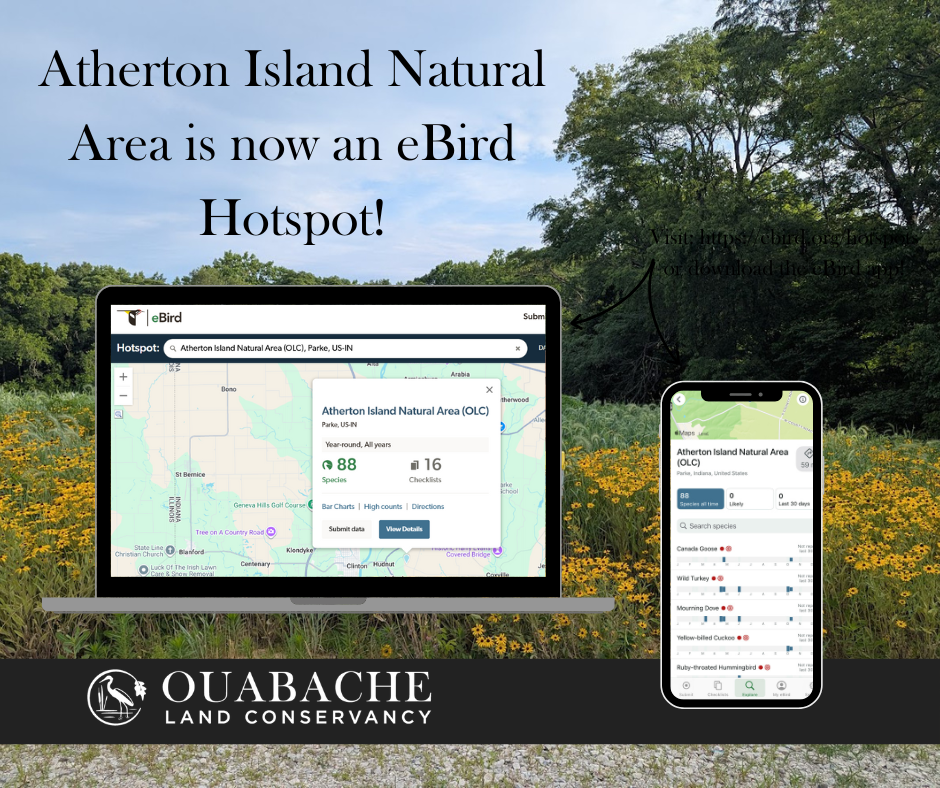
Atherton Island Natural Area is now an eBird Hotspot

Atherton Island Natural Area is now listed on eBird, the world’s largest citizen-science platform for bird observations, developed by the Cornell Lab of Ornithology. Atherton Island joins other Ouabache Land Conservancy properties already listed on eBird, including John O. Whitaker Woods Nature Preserve and Jackson-Schnyder Nature Preserve.

eBird allows birders and nature enthusiasts to record sightings, build species checklists, and contribute valuable data used by scientists to track bird populations and migration patterns. Listing OLC properties on eBird helps elevate the ecological significance of these protected lands while supporting research, conservation planning, and nature-based tourism.

With each new property added, OLC continues to strengthen a regional network of habitats that invite people to observe, learn from, and help protect the natural world, one bird sighting at a time.

❄️ Motus Tower Update: Heavy Lifting, Lightning Protection & A Whole Lot of Concrete ⚡

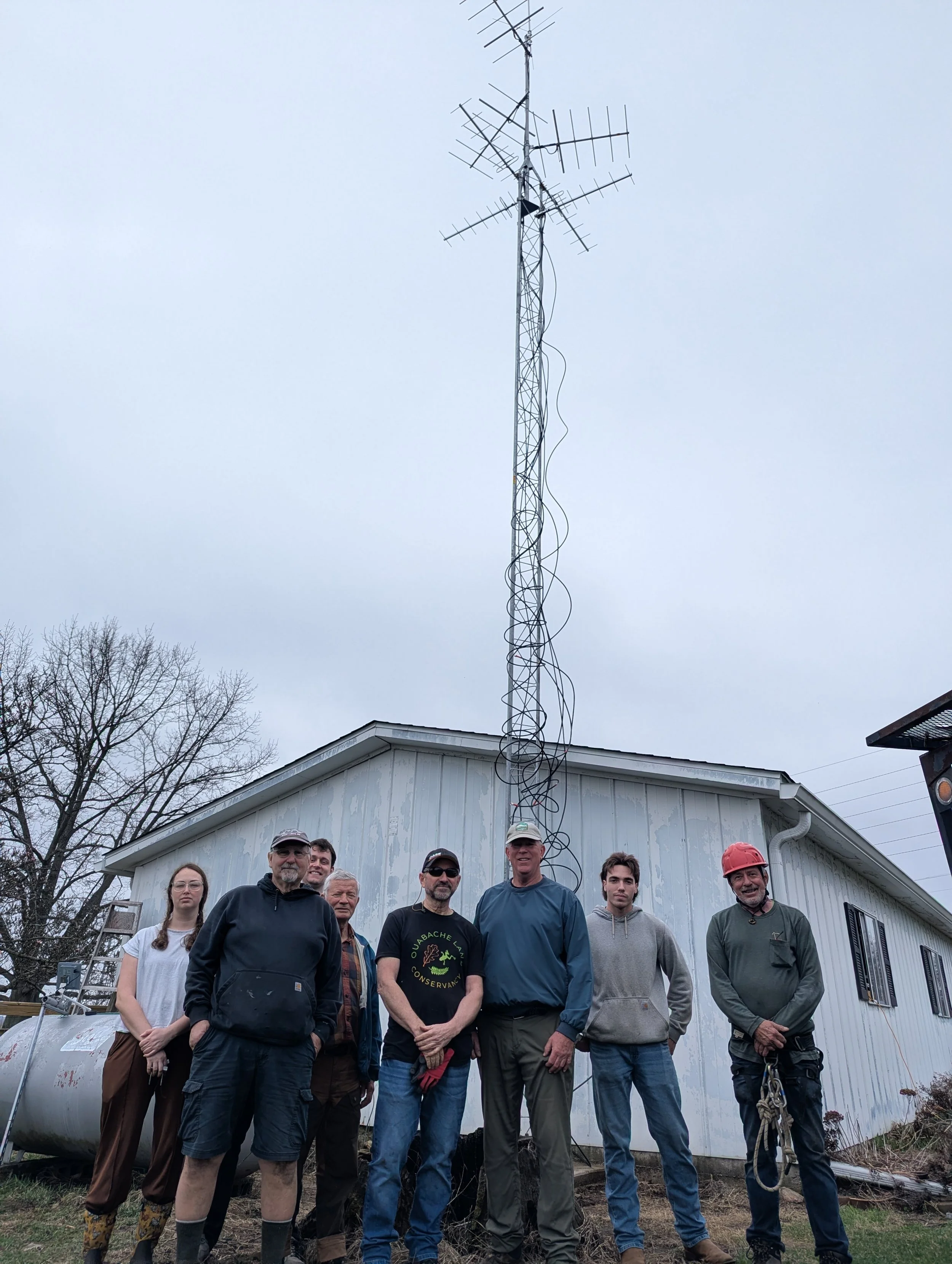
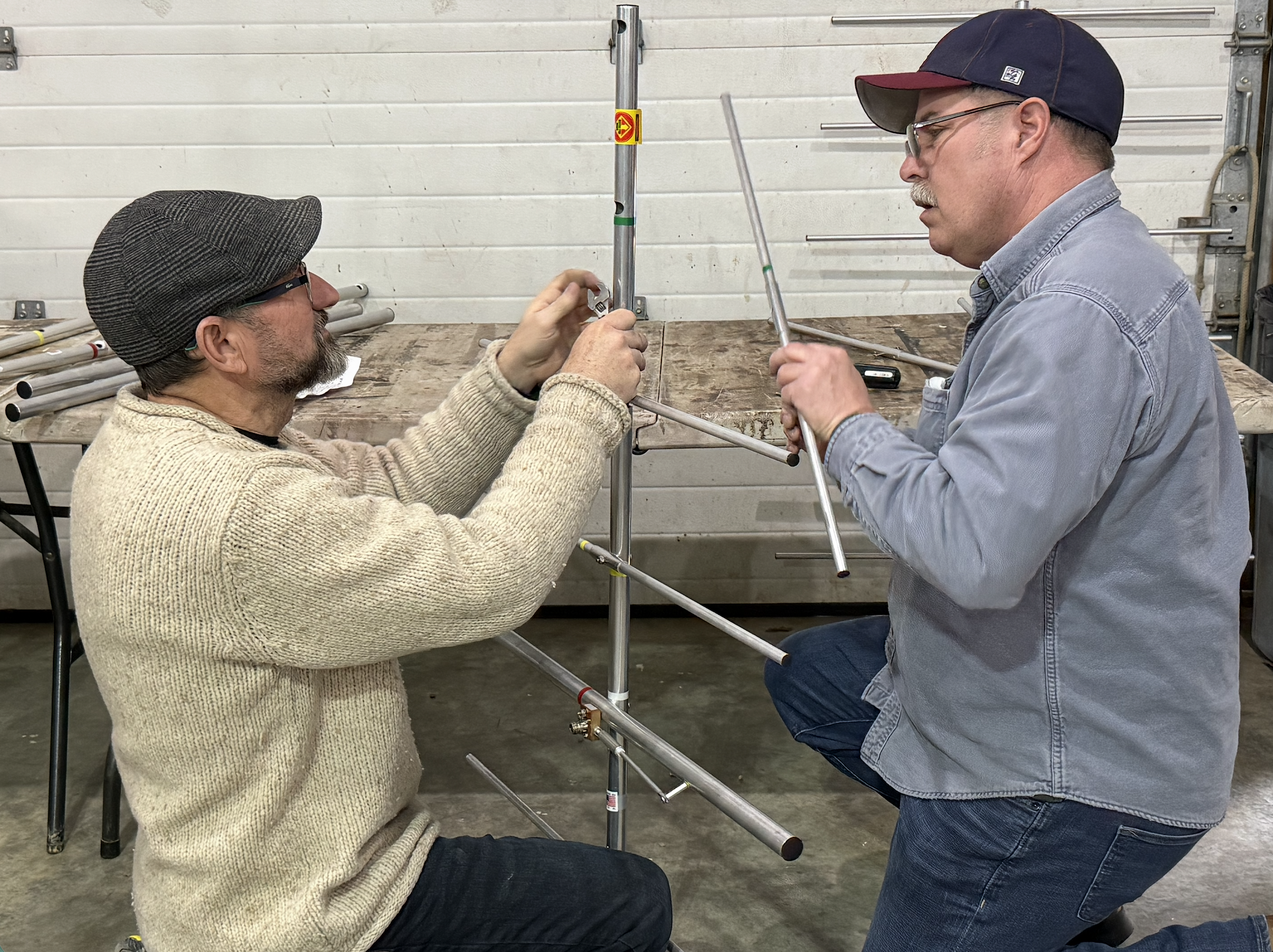
If you ever wondered what dedication looks like, picture this: Curt Stanfield braving snow and sleet with a hammer drill, driving one of three 10-foot copper-clad ground rods deep into the earth. These rods, along with 90 feet of buried static ground wire, will help protect the Motus antenna from lightning and keep our future wildlife data flowing safely.

Then came the big lift, 3,660 pounds of hand-mixed concrete poured into the foundation. Yes, hand-mixed. On a cold, snowy, rainy day.

A huge thank-you to Marty Jones, Bill Mitchell, Rick Nicholson, and Curt Stanfield for pushing this crucial phase forward. Their work sets the stage for the final tower section and antenna installation coming in January and February.

The toughest part is now officially behind us, and the Motus Tower is one step closer to bringing cutting-edge wildlife monitoring to west-central Indiana.

We are now on the Covered Bridge Festival Map

This year, something wonderfully quiet and powerful happened.

Atherton Island Natural Area officially earned a spot on the Parke County Covered Bridge Festival Map, and that little dot on the map carries a big story.

For the Ouabache Land Conservancy, this recognition is more than a pin on paper. It means one of our region’s most unique natural areas now stands shoulder-to-shoulder with Indiana’s iconic bridges, woven into the journey of thousands of visitors who explore Parke County each October.

For festival tourists, it opens a new doorway to wonder. Between bridges and craft tents, they now have the chance to step into the woods and experience a landscape protected forever because local people cared enough to save it.

Atherton Island Natural Area is rugged, rare, and beautifully wild. Being included on the map shines a light on the conservation work happening right here in west-central Indiana and invites more people to discover the landscapes that make this place special.

So if you’re traveling the Covered Bridge loop next fall, carve out a little time to wander a trail where nature tells the story. Thanks to this new listing, Atherton Island Natural Area is ready to greet a whole new wave of adventurers.

Hands-On Leadership Brings North Star Woods Closer to Opening

Bushnell's North Star Woods is one big step closer to opening, thanks to board members Bill & Denise!

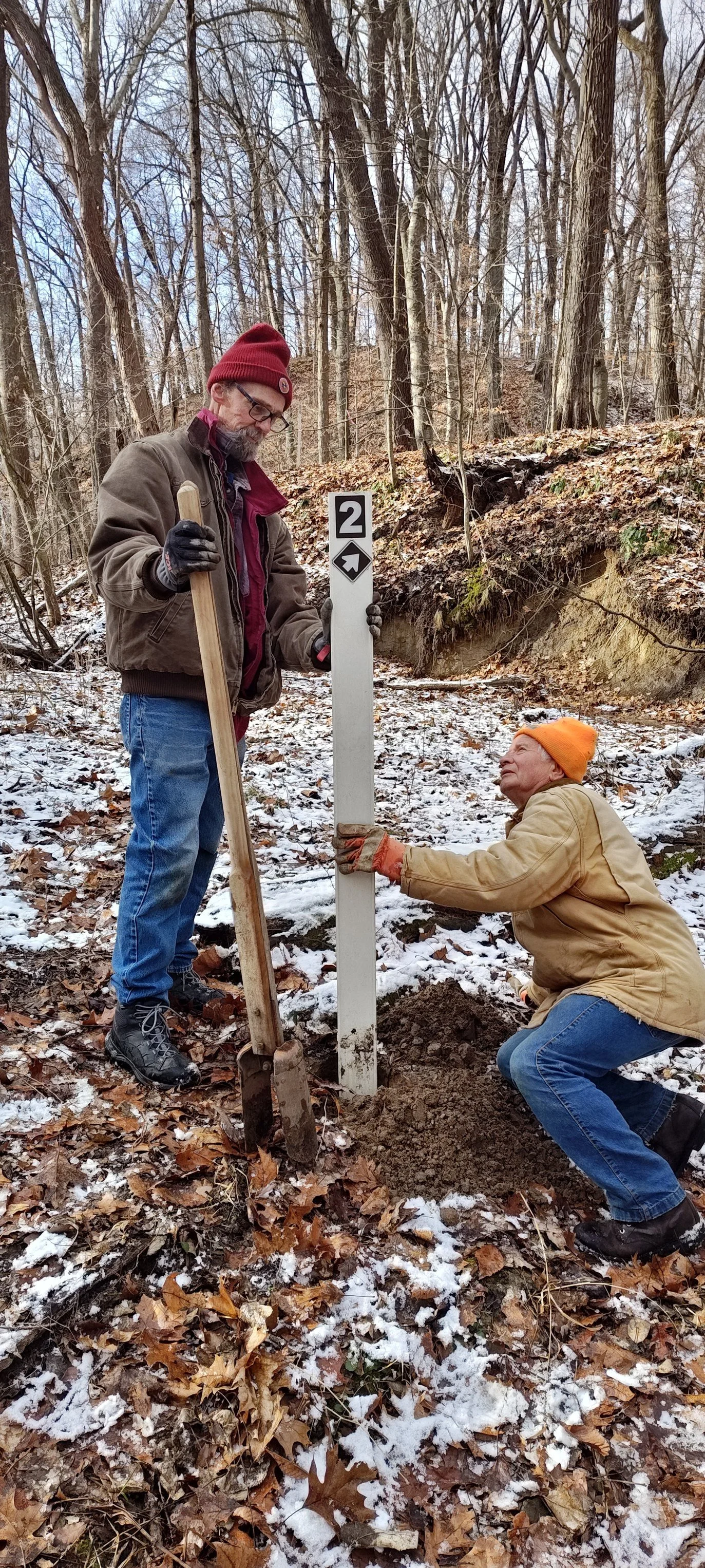
Plus, board member Marty Jones purchased all the signage, and Bill found a good price for the signposts, and the team brought it all home! The installation of all the new signs at the parking area is a required step before the property can officially open to the public.

These signs:

  • protect sensitive habitat

  • guide safe parking for up to 16 cars

  • improve visitor safety at the Hunt/Roberts Road curve

  • include accessible reserved spaces near the shelter

  • clearly mark the service road as no-parking/no-driving except for emergencies

And here’s the coolest part:

The entire parking area (~$20,000) was paid for through the 2025 Annual Celebration & Music on the Prairie with lots of help from many wonderful board members and volunteers.

Please join us in thanking Bill, Denise, and Marty for their hands-on leadership and their heart for the land. Bushnell's North Star Woods is almost ready… and it’s because of people like them.

🌿 Indiana Wetland Wonders: Why OLC Shows Up

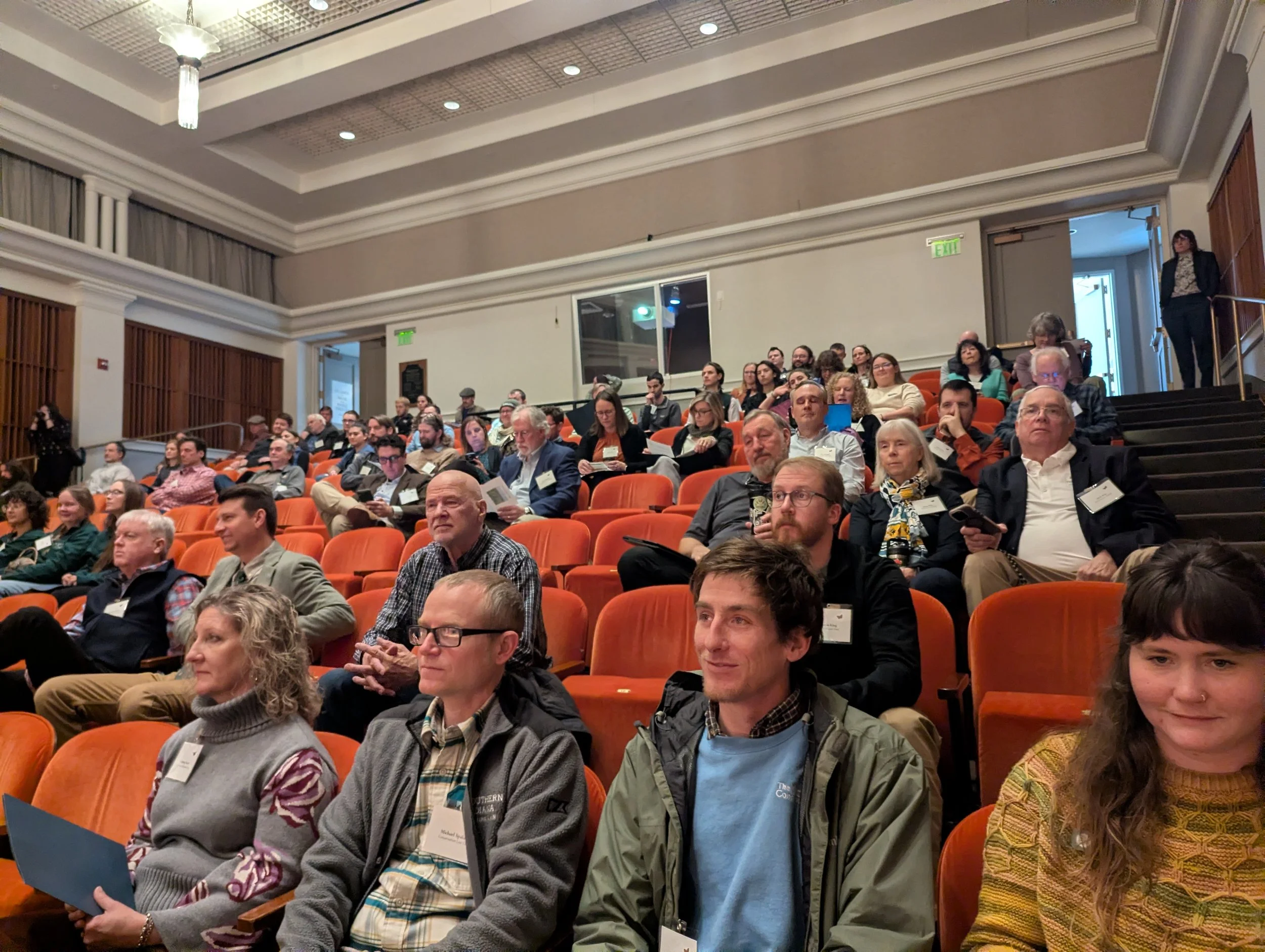
On November 11, OLC Board Member Marty Jones attended Indiana Wetland Wonders: Connecting Communities & Nature—an inspiring gathering co-hosted by the Hoosier Environmental Council, Marian University’s Nina Mason Pulliam EcoLab, and Wetlands Not Warehouses.

Having OLC leadership present at statewide conservation events is essential. These are the places where new partnerships form, best practices are shared, and the future of Indiana’s natural lands is shaped. Marty’s participation ensured that west-central Indiana and OLC’s mission had a seat at the table.

The event began with a guided tour of Marian University’s restored 75-acre EcoLab, one of the earliest ecological restoration projects in the world, designed in 1911 by Jens Jensen using entirely native Indiana plants.

Marty’s Highlights:

• A thriving beaver colony and lodge

• 30 acres of wetlands winding through the historic Riverdale estate

• Cobblestone bridges reminiscent of Acadia National Park

• Marian students conducting hands-on environmental research

• 20 radio-tagged eastern box turtles on site

• Major progress in removing invasive species like honeysuckle

After the tour, Marty attended expert presentations, including remarks from Tom Swinford of Sycamore Land Trust, and explored a stunning photo exhibit. Three of Marty’s photos were featured, along with photos by Michael Lunsford. Both are contributors to HEC’s upcoming book Indiana’s Wetland Wonders: Connecting Communities & Nature, expected next spring.

Why this matters:

When OLC board members like Marty Jones attend statewide gatherings, we stay connected to the broader conservation movement, bring home new ideas, and elevate the visibility of the natural areas we protect in west-central Indiana.

Motus Tower Update: Making Big Progress

We are excited to share a major milestone in our Motus Wildlife Tracking System installation. OLC Board Members, including Curt Stanfield, pictured in action, dug the hole where the tower’s base will be set.

This foundational step is critical: the tower needs a sturdy, level base to safely support the antenna that will track migrating birds, bats, and other wildlife as they move through west-central Indiana.

The next step is pouring the concrete, which will anchor the structure and allow us to move on to assembling and raising the tower. Once installed, this Motus station will join a growing international network helping scientists understand migration patterns, habitat use, and species movement across landscapes.

We’re grateful for the hard work of our board members and partners who are making this project possible. Stay tuned—our Motus tower is almost ready to take flight!

Cleaning Seeds for Next Season’s Prairies

On November 15th, Ouabache Land Conservancy volunteers gathered at Sportland Park’s Ed Shannon Shelter in Clinton, Indiana for a hands-on restoration effort. With plenty of wind rustling through the shelter, everyone stomped into action—using the inelegant but effective method of stepping on dried seeds and seed pods to help separate seeds from their chaff.

Cleaning and prepping these seeds is simple work, but it’s essential. They will be planted soon to expand future prairie and pollinator habitats, supporting birds, butterflies, bees, and the many species that depend on native plants to thrive.

It was a productive morning of conversation, teamwork, and a shared commitment to returning these seeds to the landscape.

A Magical First Snow: OLC Board and Advisory Hike

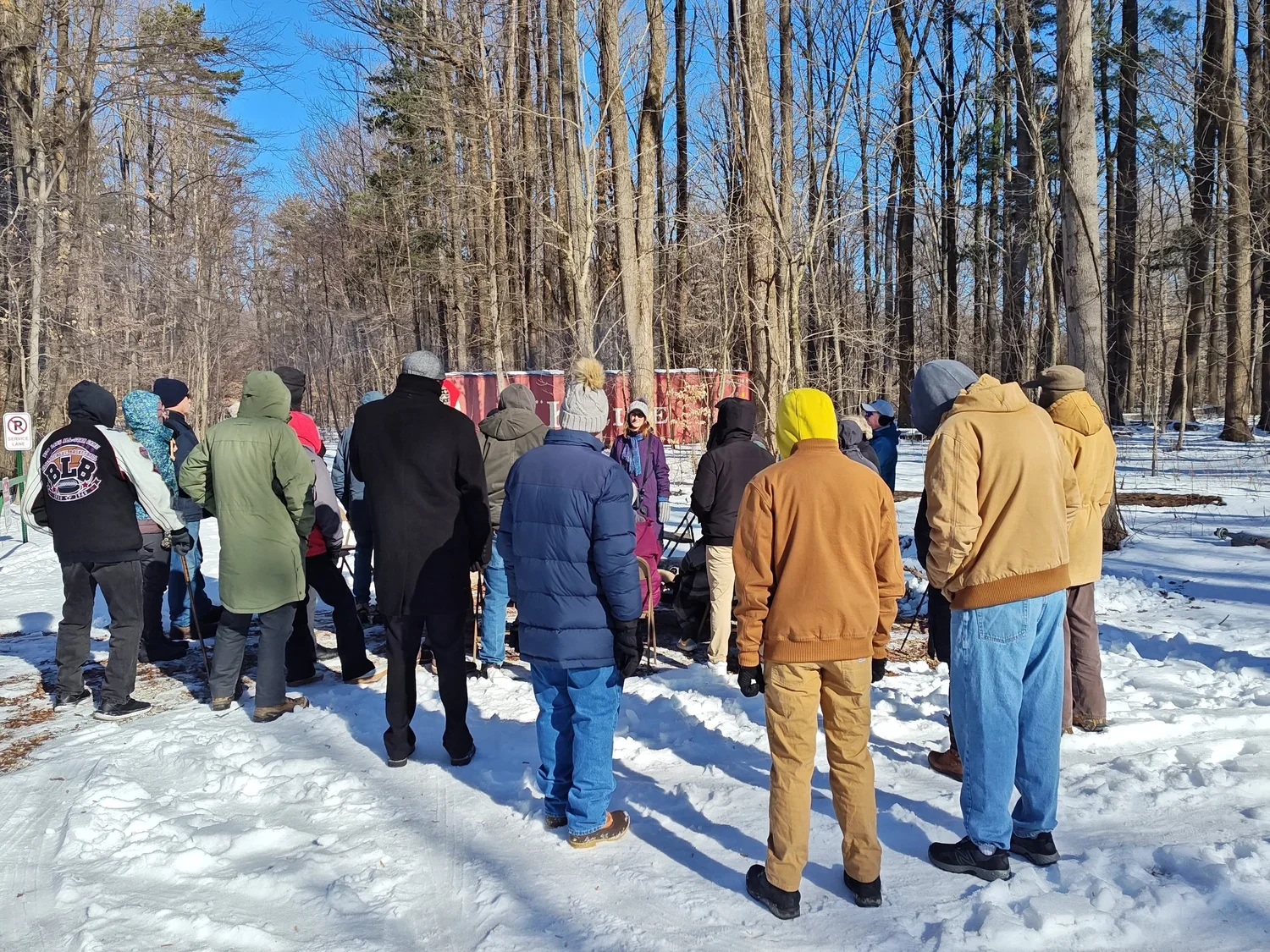
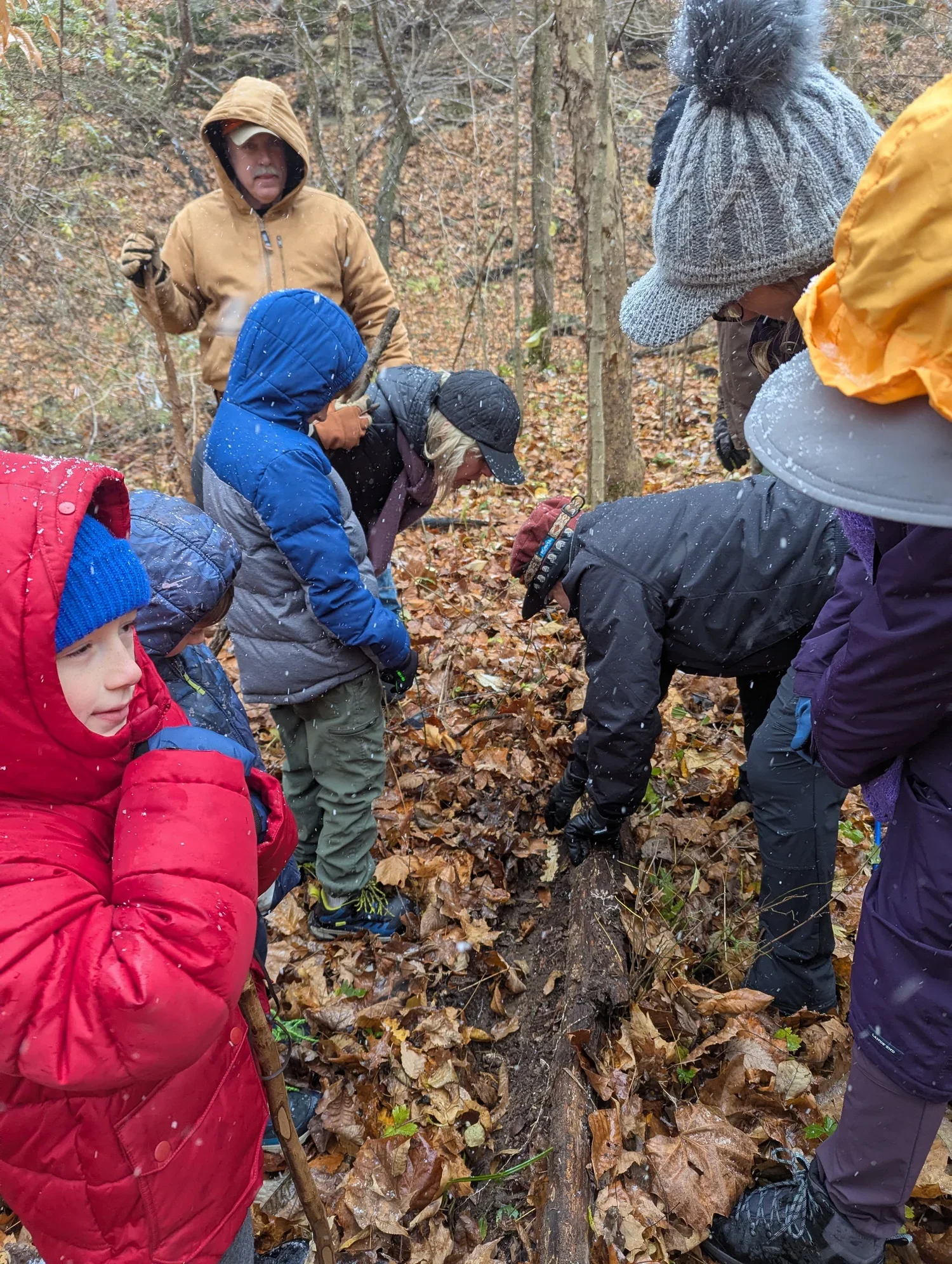
Members of Ouabache Land Conservancy’s Board of Directors and Advisory Board recently gathered for a private hike, which happened to fall during the first snowfall of the season, transforming the woods into something truly magical. Snow dusted the leaves still clinging to branches, a fleeting blend of autumn and winter that made the day feel special. Several members brought their children to experience the beauty of the season firsthand.

Adding to the excitement, the group spotted Red-backed Salamanders (Plethodon cinereus), a small woodland species that thrives in healthy forest ecosystems.

Moments like these remind us why we do this work—to protect the land, learn from it, and share its quiet magic with the next generation.

Sharing Our Story with TREES Inc.

Ouabache Land Conservancy was honored to be featured at November’s TREES Inc. meeting, held at ReTHink Inc. Board member Dr. Jim Nardi served as guest speaker, sharing about OLC’s work to protect and restore natural areas across west-central Indiana, with a special focus on Atherton Island Natural Area.

Jim highlighted the diversity of trees found on the preserve and the vital role they play in sustaining healthy ecosystems. As both a scientist and conservationist, he brought deep insight into how native trees form the foundation of our region’s natural heritage.

Attendees also enjoyed a delicious lunch of chana masala, adding warmth and hospitality to a thoughtful afternoon of learning and connection.

We’re grateful to TREES Inc. for the invitation and to ReTHink Inc. for hosting. Partnerships like these strengthen the shared roots of our conservation community and remind us how much can grow when local organizations come together.

Grant Awarded for Sanctuary Oaks Parking Area

Ouabache Land Conservancy is honored to receive a $5,000 grant from the Wabash Valley Community Foundation’s Sullivan County affiliate to support a new parking area at Sanctuary Oaks Nature Preserve.

A Place Rooted in the Community

Sanctuary Oaks spans 14 acres of classified forest in Sullivan County—a peaceful landscape of mature trees and thriving wildlife. Access has been limited, and this project will make it safer and easier for visitors, volunteers, and local groups to enjoy this special place.

Local Support, Local Impact

This project is truly by the community, for the community. OLC is partnering with the Sullivan County Highway Department, Wholesale Drainage Supply (a local business providing supplies), and a Sullivan County–based contractor for construction. Every step—from materials to manpower—supports local people and strengthens our shared investment in conservation.

Why It Matters

Improved access may sound simple, but it’s essential to long-term stewardship. The new parking area will make Sanctuary Oaks more safe and welcoming, helping connect more people with the beauty of west-central Indiana’s woodlands.

We’re deeply grateful to the Wabash Valley Community Foundation’s Sullivan County affiliate for their partnership and trust. Work will begin soon, and we look forward to sharing progress updates as this community effort takes shape.

Learning from the Land: Prairie Field Day at Atherton Island

Credit: Vigo County Soil and Water Conservation District

Staff from the Vigo, Vermillion, and Parke County Soil and Water Conservation Districts and others recently came together for a hands-on field day focused on prairie restoration and native seed collection, all eager to learn from Dr. Jim Nardi, who helped restore two remarkable prairie sites in Parke County—one along the riverbottoms within the Healthy Rivers INitiative and another at Ouabache Land Conservancy’s Atherton Island Natural Area.

Jim shared insights into what plants would have naturally grown before these lands were cultivated, helping guide today’s restoration work. Participants spent the day walking through the prairie, learning, and collecting native wildflower seeds.

Field days like this are about more than learning techniques—they’re about reconnecting with the land, sharing knowledge, and rediscovering the wonder that drew so many of us to conservation in the first place.

Teaming Up for Prairie Care at Smith Cemetery Nature Preserve

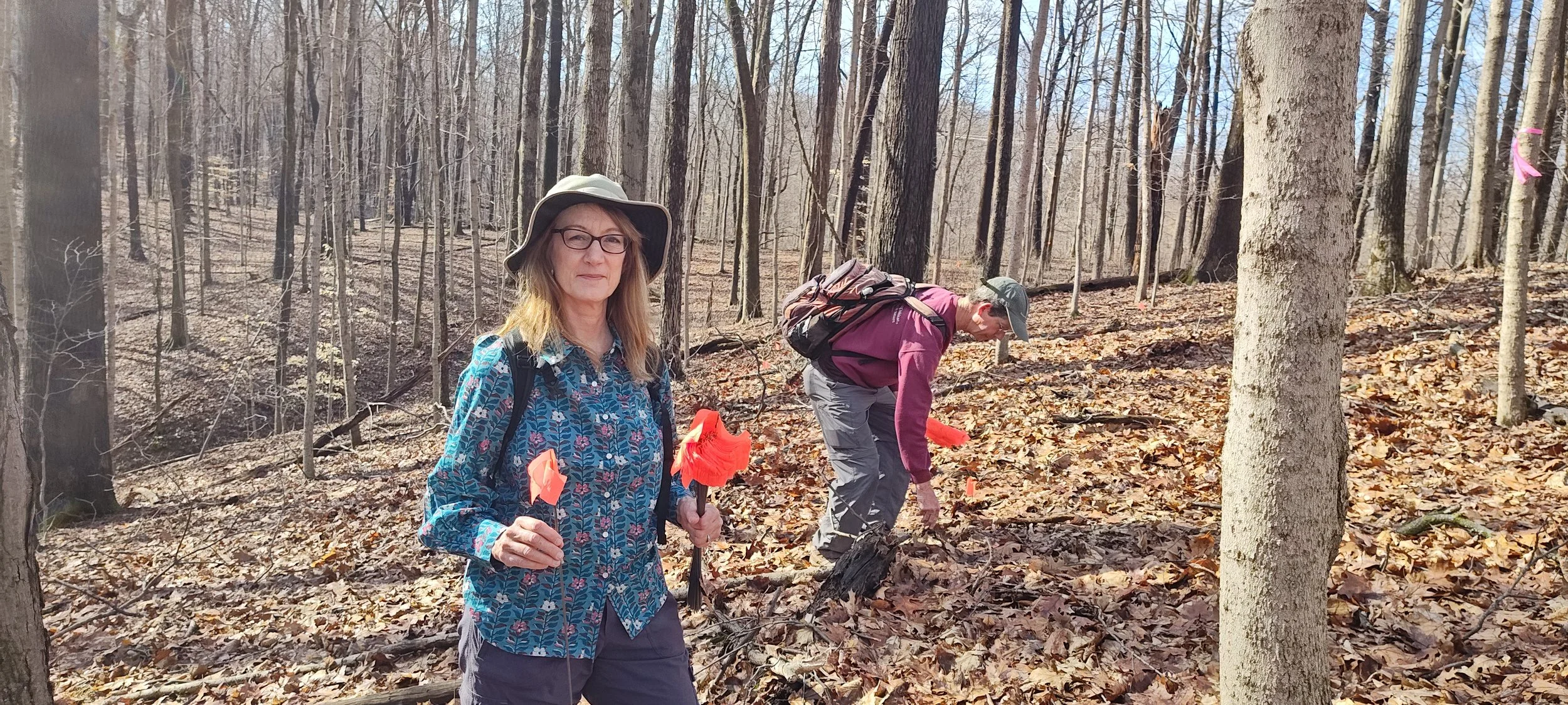
The Wabash River Invasives Project (WRIP) organized a great volunteer morning at Smith Cemetery Nature Preserve in Vermillion County! Helping hands came together to tackle an unusual challenge—controlling sassafras seedlings that were starting to overtake the prairie.

While sassafras is a native species, in prairie habitats it can behave more like a weed, quickly spreading and shading out the native wildflowers and grasses that define these rare ecosystems. At the request of the Indiana Division of Nature Preserves, volunteers worked together to remove young trees and help keep this special site thriving.

Ouabache Land Conservancy was proud to partner on this project with WRIP, Purdue Extension Vermillion County, and the Vermillion County Soil and Water Conservation District. It was a great day of teamwork, conservation, and shared care for one of Indiana’s beautiful prairie remnants.

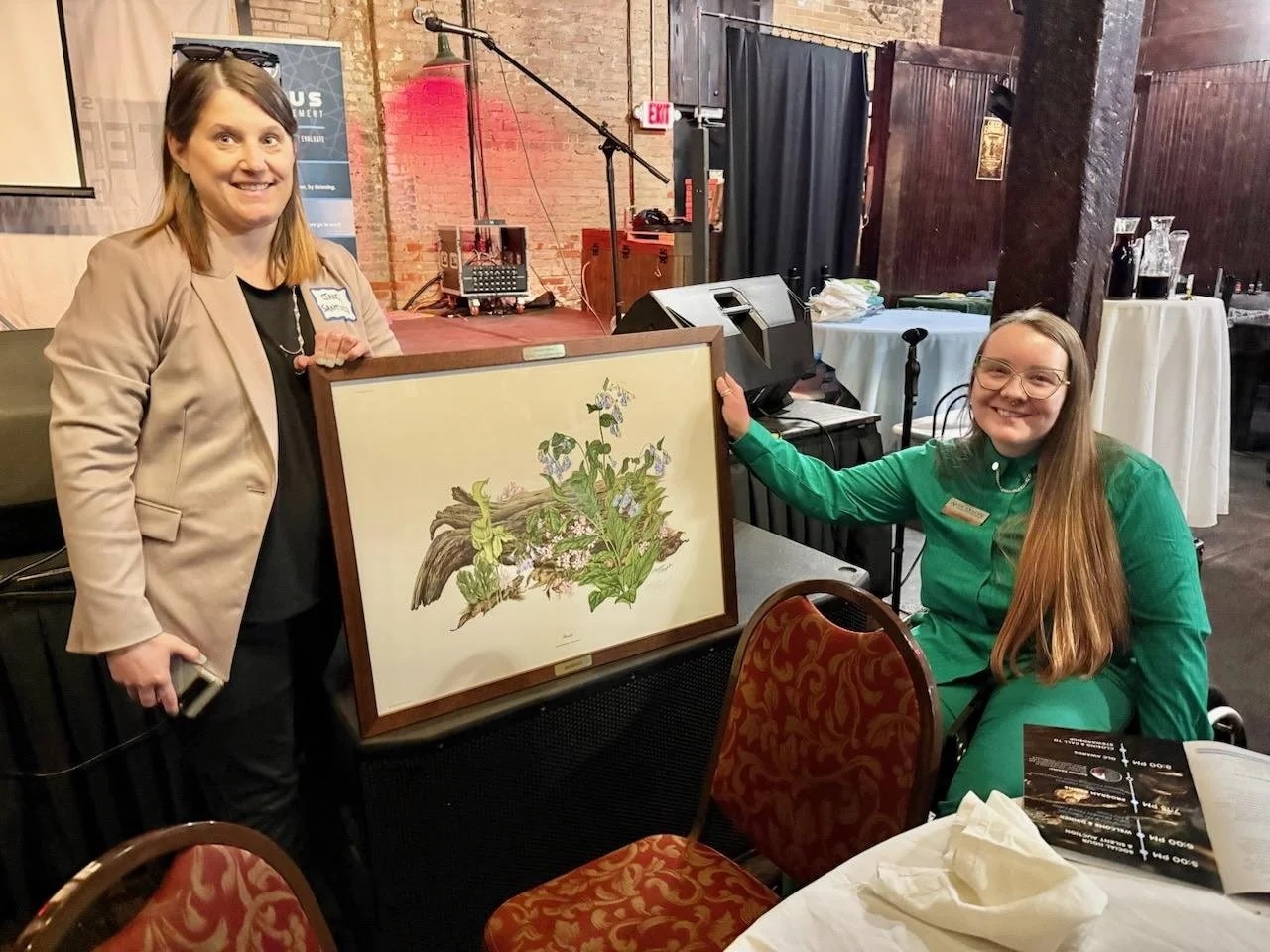
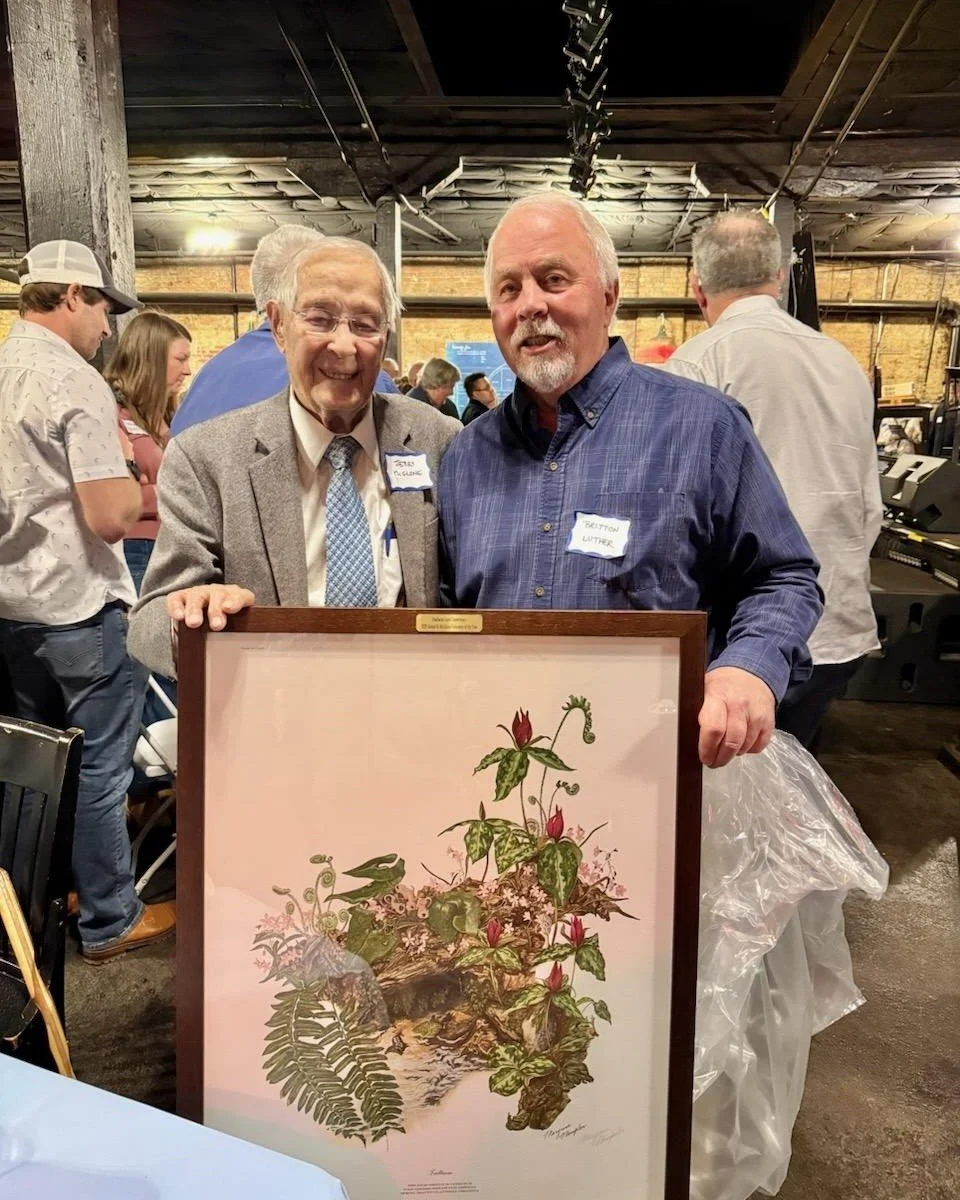
Ouabache Land Conservancy Showcases Artist Jim Nardi at the Covered Bridge Art Gallery

Credit: Covered Bridge Art Gallery

We are excited to announce a new partnership with the Covered Bridge Art Gallery on the Square in Rockville, Indiana. Beginning with the Covered Bridge Festival, OLC will have a booth inside the gallery, offering visitors a chance to experience art and conservation together.

Featuring Jim Nardi, Scientist & Artist

The featured artist representing OLC is Dr. James Nardi, a retired research biologist from the University of Illinois, as well as an accomplished author and illustrator. His career in biology, paired with his extraordinary artistic talent, gives his work a unique perspective that celebrates both the beauty and intricacy of the natural world.

Visitors will find a range of his creations available for purchase, including fine art prints, books, and illustrated note cards. Each purchase supports OLC’s ongoing efforts to conserve land across the Wabash Valley.  Eighty percent of all proceeds from sales at OLC’s booth will go directly to support the Conservancy’s mission to protect land and natural resources in West Central Indiana, while the remaining twenty percent benefits the Covered Bridge Art Gallery.

Why It Matters

“Having Jim Nardi’s work featured at the Covered Bridge Art Gallery is significant because it highlights the deep connection between art, science, and conservation. Jim’s illustrations don’t just capture nature’s beauty; they remind us of what we protect through land conservation,” OLC VP of Programs Phil Cox stated.

The Covered Bridge Festival is one of Indiana’s largest and most beloved events, drawing thousands of visitors each October. This new collaboration provides an opportunity for festivalgoers to enjoy world-class artwork while also supporting local conservation initiatives.  

Visit the Gallery

Festival attendees and art enthusiasts alike are encouraged to stop by the OLC booth at the Covered Bridge Art Gallery on the Square in Rockville during the festival and the coming months.  See Jim Nardi’s work, take home a piece of art, and be part of the mission to protect the lands and waters of West Central Indiana.

Koch Brothers Cultivate Conservation in Northern Vigo County

In the rolling fields of northern Vigo County, brothers Joe and Chad Koch, along with their father, James W. Koch Jr., are proving that good stewardship of the land and profitable farming can go hand in hand. Operating as Koch Farms, the trio has embraced conservation practices that not only benefit their cattle operation but also protect the soil and improve water quality for the entire community.

About five years ago, Sara Peel approached them with information about the 319 Grant program, a state and federal initiative that helps farmers implement practices to reduce water pollution. The Ouabache Land Conservancy manages the 319 grant for the Otter Creek Watershed. Sara Peel is a contractor for OLC who helps OLC manage the 319 grant program. Initially, the Kochs were interested in planting cover crops for winter grazing. But soon, they realized the benefits went far beyond feeding cattle. “We started doing it for the cattle, but then we saw it was keeping erosion down and building up soil fertility. It just made sense to keep expanding,” Joe Koch said.

Cover Crops: Cattle Feed and Soil Protector

On Koch Farms, cover crops like wheat, and soon rye, serve a dual purpose. During fall, winter, and early spring, cattle graze on the green growth, reducing the need for expensive hay and corn feed. Meanwhile, the plants’ root systems anchor the soil, keeping it from washing away during rain or blowing off the sandy fields.

The benefits are visible on the farm’s hilly terrain, where conventional tillage once left small ditches and bare spots. “Those plants keep the dirt in place. If it washes, you lose fertilizer and have to go back in with equipment to fix the field, which defeats the whole purpose of no-till,” Joe explained.

No-Till Farming: Saving Time, Fuel, and Moisture

The Kochs have been experimenting with no-till methods for more than 25 years, starting with one field near Joe’s home. By reducing the number of times they work the soil, they save on fuel, limit soil disturbance, and preserve valuable moisture in their sandy soils. “Not all ground is suited for no-till, but where it works, it cuts costs and labor. You can’t find as many people to work these days, so you’ve got to do what you can with family,” Joe Koch admitted.

Equipment Upgrades Through the 319 Grant

Through the 319 Grant, Koch Farms has been able to make key equipment upgrades that improved efficiency and crop establishment. The first project involved refurbishing their Case 5400 drill, replacing worn seed hoses, and adding new closing wheels to ensure the seed is adequately covered with soil. “Without dirt over your seed, it won’t grow. Birds will eat it, or it’ll dry out before it germinates. The closing wheels make sure it’s covered and gets a chance to sprout,” Joe Koch explained.

The grant also helped purchase a second planter with spike closing wheels for variable soil conditions and a GPS-enabled fertilizer truck monitor. The latter allows them to spread seed or fertilizer with precision, even in wetter conditions that might bog down a tractor.

Protecting the Watershed

While the upgrades have improved efficiency and profitability for Koch Farms, they also serve a bigger purpose, protecting the local watershed. By keeping soil in place and maintaining year- round plant cover, the Kochs are reducing sediment and nutrient runoff into nearby creeks. “It all comes back to erosion. If your dirt washes away, it’s not just your field that suffers; it ends up in the water we all share,” Joe Koch said.

Looking Ahead

The brothers aren’t planning to convert every acre to no-till and cover crops, but they expand the practice a little each year. With the added soil fertility from cover crops, they’ve been able to reduce fertilizer use in some areas, cutting costs without sacrificing yields. And while Chad may prefer working with grain Joe might be the more outgoing spokesman, the balance works for them. “We’re night and day, but that’s why it works. We each do our part,” Joe Koch laughed.

As they look toward the future, the Kochs say they’ll keep adopting practices that make sense for their operation and for the land they hope to pass down. After all, in farming, good business and good conservation often grow best together.

OLC at the 20th Annual Indiana Bat Festival

The 20th Annual Indiana Bat Festival at Indiana State University was all about celebrating bats—and having fun while learning about them! Ouabache Land Conservancy was thrilled to be part of the festivities with a booth designed to engage kids and families.

Our bat-themed coloring pages kept little hands busy and sparked conversations about these fascinating creatures. Families stopped by to color, ask questions, and take home information about how OLC protects land (and wildlife) here in west-central Indiana.

From crafts to live bat demonstrations, the festival offers something for everyone. We loved being part of this family-friendly tradition and sharing in the excitement of discovery and play!

Walking the Walk: Trail Work at Green's Bluff

At Ouabache Land Conservancy, our commitment to land doesn’t stop at our own preserves. We’re proud to be part of a larger community of people and organizations working to care for Indiana’s natural areas.

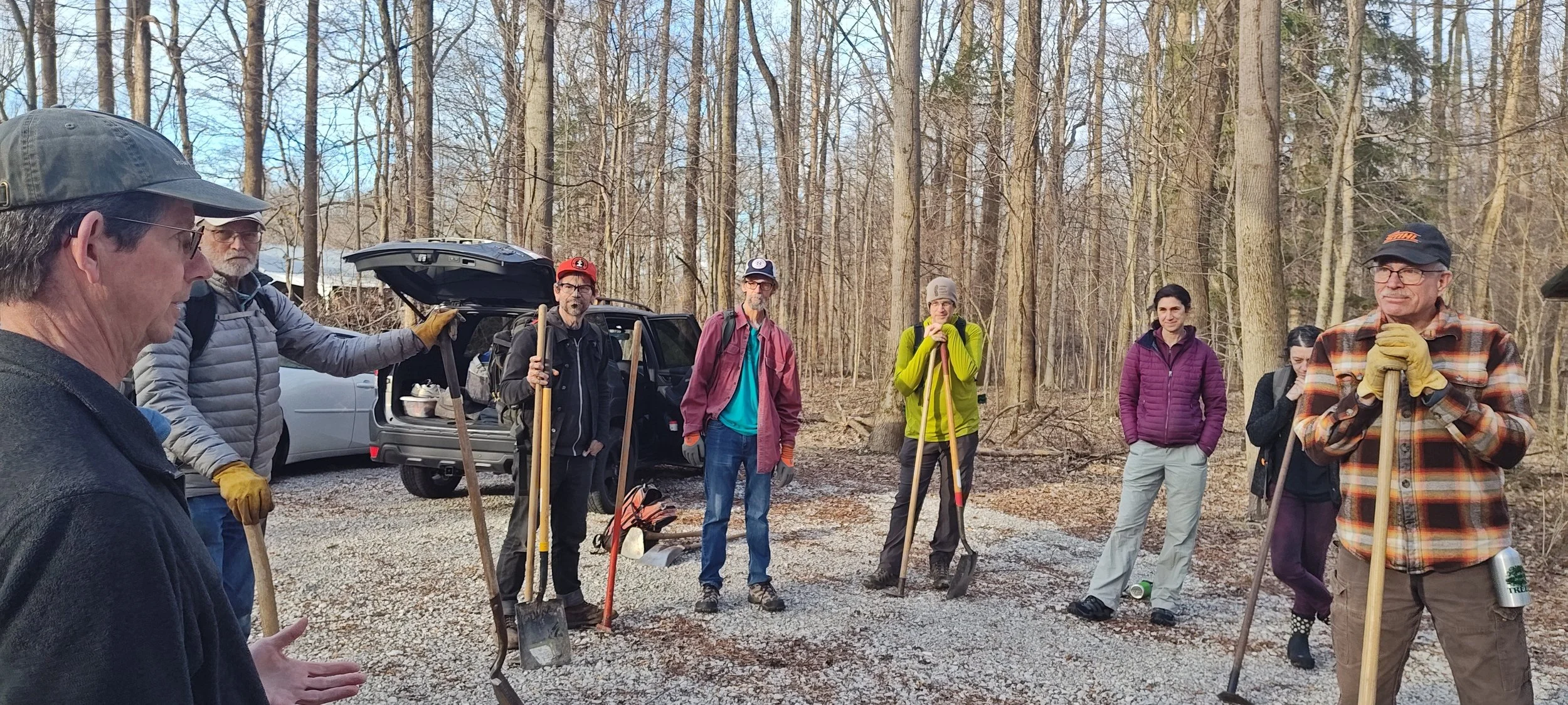
Board member Denise Marie Sobieski recently joined The Nature Conservancy and the Hoosier Hikers Council to blaze new trails at Green’s Bluff Nature Preserve. Boots on the ground, Denise spent the day helping to create pathways that will connect more people to nature.

This kind of work matters. It’s sweaty, sometimes thorny, often quiet—but every mile of trail creates new opportunities for families, hikers, and explorers to discover Indiana’s wild beauty.

OLC is proud to walk the walk alongside our friends in conservation. Whether it’s protecting prairies here in west-central Indiana or pitching in statewide, our volunteers and board members are part of a bigger movement to ensure nature thrives for future generations.

Learning Through Play at Explore Wabashiki

This year’s Explore Wabashiki event was a chance for Ouabache Land Conservancy to connect with neighbors, celebrate nature, and share our mission with the wider community.

Board President Alysa Morley and board members Bill Mitchell and Dan Bradley helped set up, tear down, and staff our booth—along with other dedicated volunteers. From answering questions about local conservation to sharing how people can get involved, we enjoyed meaningful conversations with visitors of all ages.

We also made sure our table wasn’t just informational—it was interactive. Guests tested their observation skills in our “guess how many” game with native Baptisia seeds and seed pods, and tried their hand at identifying local flora through our native plant photo quiz. Both activities were designed to spark curiosity, start conversations, and highlight the biodiversity we’re working to protect.

Events like Explore Wabashiki remind us that conservation isn’t only about protecting land—it’s also about helping people discover, understand, and appreciate the natural world right in their own backyard.

Tracing the Future of Plants Along the Wabash: Rich Hull’s Research at Atherton Island

Rich Hull with OLC board member Jim Nardi

A Journey Into the Wabash River Corridor

When most people look at the woods and prairies along the Wabash River, they see a landscape shaped by water, time, and history. For Rich Hull, a doctoral student at Indiana University, those same landscapes are a living archive — a place where the shifting distribution of plants tells the story of climate change, invasive species, and the resilience of Indiana’s ecosystems.

Hull began his research nearly five years ago, eventually reaching out to the Ouabache Land Conservancy (OLC) for access to its preserves. His additional work at Atherton Island Natural Area (AINA) has been especially valuable, giving OLC a clearer picture of the land it is protecting. With the data Hull has gathered, OLC will be able to track plant species at the site over time and better understand changes in biodiversity. Both Atherton Island and the Jackson-Schnyder Nature Preserve are now part of Hull’s larger survey, which spans the Wabash River corridor from Tippecanoe County in the north to Posey County in the south.

Although connected in spirit, Hull’s project at Atherton Island is separate from his dissertation research. At AINA, his goal was to create a tool for OLC, a baseline list of plant species that can be revisited in the future to monitor shifts in biodiversity. This list was generated primarily through visual observations. By contrast, the sites included in his dissertation involved a more rigorous method: Hull collected and preserved physical specimens of every species he recorded. In total, he gathered more than 13,000 plant specimens, creating a permanent record of each species’ exact location. This collection not only ensures that identifications can be verified or corrected later, but also allows for adjustments as taxonomic concepts evolve, for example, when species are split into separate classifications or lumped together.

A Researcher’s Calling

Hull’s journey into botany began early. “By the time I was in 10th grade, I knew I wanted to work outside. I thought I’d become a wildlife biologist, but as I started documenting plants, I realized just how much was missing from the record,” Hull stated. In high school, he cataloged species in his home county in Georgia, a project that grew in college into formal research on fireflies and vascular plants. “That really hooked me. Plants are the foundation of everything else, from insects to birds to mammals. If we don’t understand what’s happening to plants, we don’t understand what’s happening to ecosystems,” Hull explained.

The Wabash River: A Corridor of Diversity

Hull chose the Wabash River Corridor for its unique ecological importance. Though only 10 counties are included in his study, they contain nearly 70 percent of Indiana’s native plants ever recorded in natural environments. “The Wabash packs an incredible amount of plant diversity into a relatively narrow stretch of land. It’s one of the best places to study how species adapt to climate change, because the corridor provides a natural pathway for northward migration,” Hull explained.

Two major biomes, the Eastern deciduous forest and the tallgrass prairie, have historically converged along the river, creating transition zones like oak savannas and barrens. The corridor also carries with it wide swings in climate: southern plants follow the Mississippi and Ohio rivers northward into Indiana, while northern species drift down from the Great Lakes.

What the Data Reveals

At the heart of Hull’s project is a comparison between modern field surveys and historic records, particularly those collected a century ago by botanist Charles Deam. Deam’s approach was to collect one specimen per species per county. That gave us a broad map of where plants existed, but it wasn’t site-specific like modern surveys. Reconciling county-level records with precise site surveys is a challenge, but it lets us see broader shifts in species presence and distribution,” Hull explained.

The results so far are striking. Invasive species are common in landscapes where they were once absent. Some native plants, considered “weedy” but resilient, are moving north faster than expected. A handful of rare species may be shifting out of their historical ranges altogether.

“Seeing plants move north within just 100 years is remarkable. Normally, that would take much longer without human-driven climate change,” Hull stated.

Why Seasonal Surveys Matter

Documenting Atherton Island requires more than one visit a year. “If you miss a few weeks, you miss a whole group of plants. Spring ephemerals bloom and disappear quickly, sedges fruit for only two to four weeks, and oaks can only be properly identified when they’re dropping acorns in the fall,” Hull explained.

By visiting multiple times throughout the growing season, Hull can capture a more complete picture of the preserve’s biodiversity. In summer, sedges distinguish themselves. In the fall, asters, Indiana’s most prominent plant family, and oaks dominate the landscape. “Each trip fills another piece of the ecological puzzle,” Hull said.

Why It Matters to Everyone

For those who live far from nature, the loss of a plant species may feel distant. Hull argues otherwise. Plants are the foundation of terrestrial life. They provide food, shelter, and habitat for everything from insects to birds. They drive pollination, which underpins our crops. If we start losing native plants, we lose the building blocks of the ecosystems that sustain us,” Hull explained. Hull adds that there is also a heritage element at stake. “These species are part of our natural history. Preserving them means preserving something that defines Indiana and the Wabash Valley,” Hull exclaimed.

Lessons for Future Botanists

While passion for plants is essential, Hull emphasizes that modern botany requires broader skills. “Writing, statistics, coding, those are just as important. You can love plants, but if you can’t analyze the data or communicate it, the work doesn’t reach the people who need it,” Hull explained.  Although the number of professional botanists has declined compared to past generations, Hull believes that this opens new opportunities. “There aren’t as many botanists as there used to be, but the need is just as strong. That makes the work rewarding and urgent,” Hull explained. 

Looking Ahead

Hull’s dissertation will ultimately consist of at least three published chapters: a section of one is partially published in the Proceedings of the Indiana Academy of Science, updating county plant records; another comparing surveys at Fall Creek Gorge across decades, and a final synthesis analyzing distribution shifts across the corridor in relation to climate change.

For now, the work continues at places like Atherton Island. Each survey builds not only today’s dataset, but also the foundation for future scientists a century from now. The next scientist will have an easier time. They’ll be able to compare site surveys directly to what Hull recorded, and that will tell them how much further things have shifted with site-by-site context. In that sense, Atherton Island is not just a preserve; it’s a living time capsule.

Gearing up for Music on the Prairie!

Ouabache Land Conservancy board members teamed up at Atherton Island Natural Area armed with folding tables and canopy tents as we made final preparations for Music on the Prairie. From hauling supplies to helping stake down tents, our all-volunteer crew rolled up their sleeves to make sure everything is ready for a beautiful afternoon of music, nature, and community.

It’s not glamorous work—sometimes it’s dusty and sweaty—but it’s done with love for our mission and gratitude for the people who will gather with us.

Events like this don’t just happen; they’re built by people who care. We can’t wait to welcome you to the prairie, share great music, and celebrate the land we’re protecting together.