
Earlier this month, Ouabache Land Conservancy Board Members Jim Nardi, Bill Mitchell, and Denise Sobieski spent the afternoon in the woods at Atherton Island Natural Area, boots muddy, hands busy, and spirits high. Together, they worked on Trail 2, making a thoughtful but important change: rerouting a section of the trail so it no longer runs directly through the creek bed. At first glance, a trail through a shallow stream might seem charming, but from an ecological and conservation standpoint, it’s something we work hard to avoid.
Trails Shape How We Care for the Land
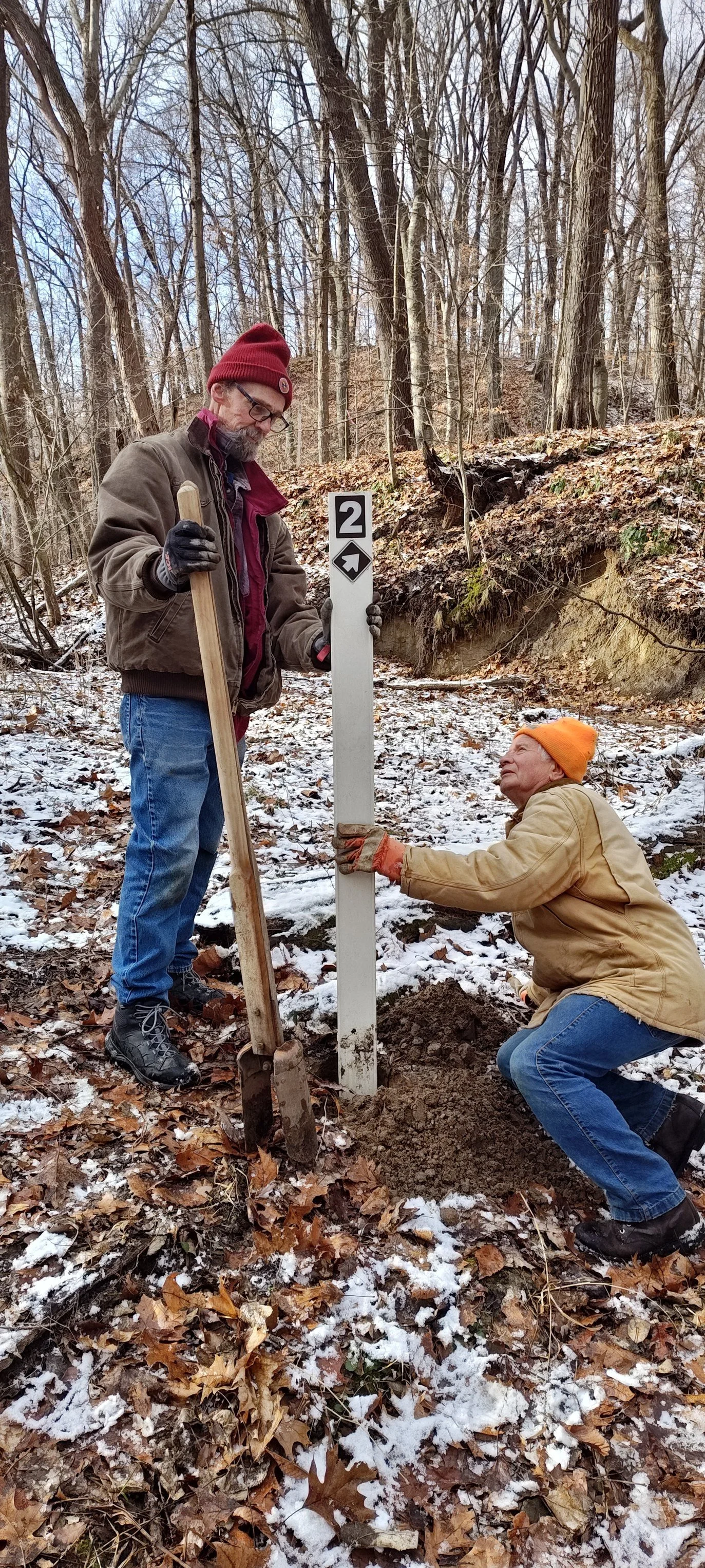
Trails are not just lines on a map. They quietly guide how people move, where feet fall, and how often certain places are touched. When a trail runs directly through a stream or creek bed, every footstep has consequences. Repeated use compacts soil and gravel, which disrupts aquatic habitat. It stirs up sediment that clouds the water, making it harder for fish, amphibians, and insects to breathe, feed, and reproduce. Over time, what looks like harmless splashing becomes erosion, widened channels, and degraded water quality downstream.
By moving the trail out of the stream, we’re giving the creek room to do what it’s supposed to do: flow naturally, support life, and change gently with the seasons.
Protecting the Small Things That Matter Most
Creeks like the one at Atherton Island are living systems. They’re home to salamanders, macroinvertebrates, frogs, and countless organisms we rarely see but deeply depend on. These small species are often the first indicators of ecosystem health.
Keeping trails out of waterways helps:
Reduce erosion and sedimentation
Protect spawning and shelter areas for aquatic life
Maintain cooler water temperatures by preserving stream banks
Prevent trail widening and habitat loss over time
This is quiet conservation work. No ribbon cuttings. No heavy machinery. Just careful decisions that add up to healthier land.
A Better Experience for People, Too
Rerouting the trail doesn’t just benefit the creek, it improves the hike. A stable path is safer, more accessible, and more resilient during wet seasons. It keeps hikers from trudging through mud, slipping on slick rocks, or unintentionally damaging sensitive areas. The goal is always balance: welcoming people into nature while ensuring nature isn’t loved to death.
Stewardship in Action
At Ouabache Land Conservancy, this kind of work reflects a larger philosophy. Conservation isn’t only about protecting land on paper. It’s about ongoing stewardship, returning to places again and again, and adjusting as we learn more.